Shoots
Shoots
Introduction
Introduction
Shoots is a proposed educational programme that turns allotment space into a living classroom, giving students direct experience of ecological systems rather than a second-hand account of them. The UK has 24,000 state schools, and allotment networks are expanding across major urban fringes. The infrastructure already exists. What was missing was the operational framework to make the connection work at scale. Shoots builds that layer.
Year
2025
Industry
Education
Scope of work
/
Cultural research
/
Social innovation
/
Operational architecture
/
Service design
/
Service blueprinting
Timeline
8 weeks

Introduction
Shoots is a proposed educational programme that turns allotment space into a living classroom, giving students direct experience of ecological systems rather than a second-hand account of them. The UK has 24,000 state schools, and allotment networks are expanding across major urban fringes. The infrastructure already exists. What was missing was the operational framework to make the connection work at scale. Shoots builds that layer.
Year
2025
Industry
Education
Scope of work
/
Cultural research
/
Social innovation
/
Operational architecture
/
Service design
/
Service blueprinting
Timeline
8 weeks
Challenges
Challenges
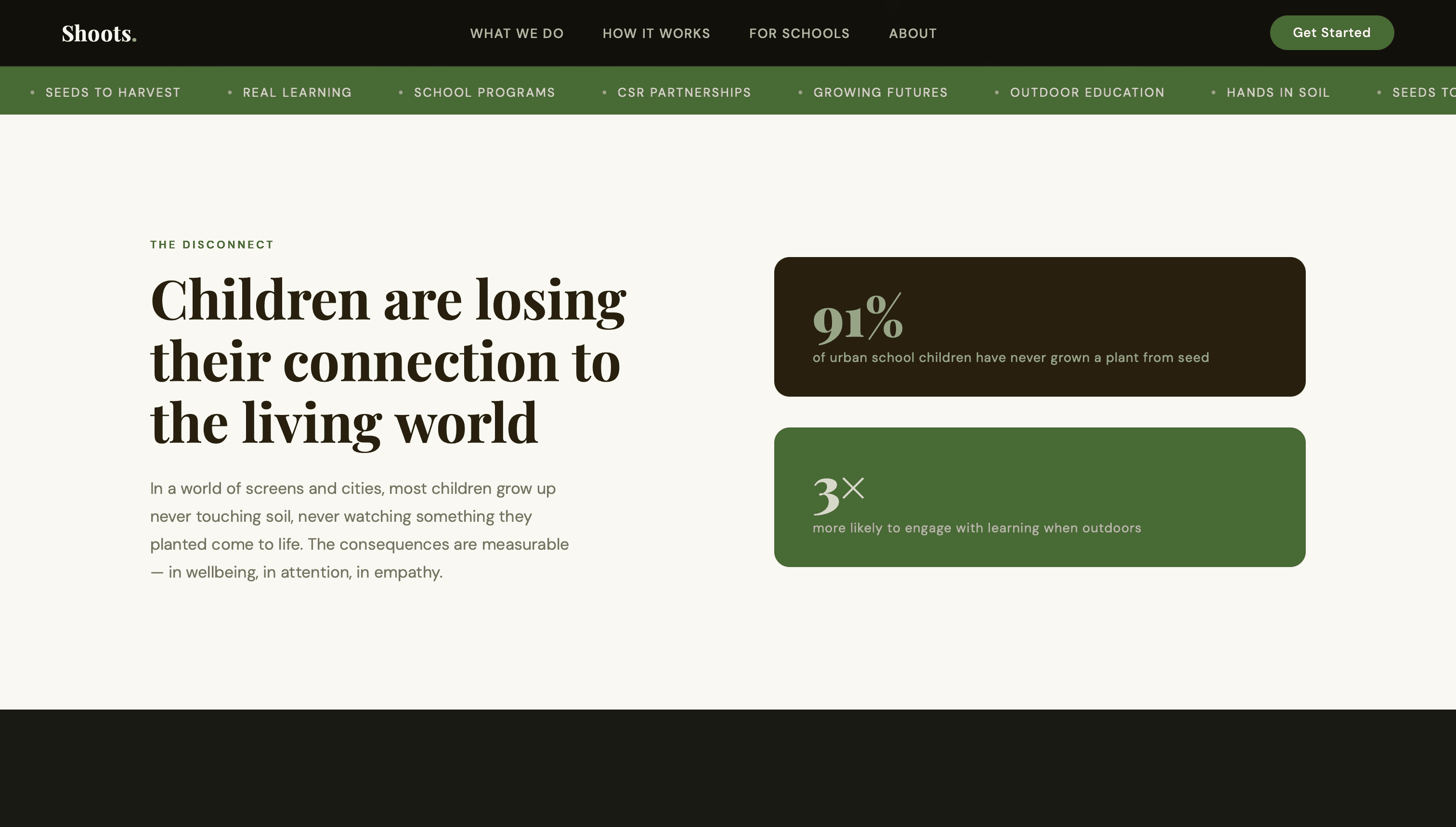
Environmental education in the UK has a structural failure at its core. Teachers are willing, students are curious, but the dominant mode of delivery produces students who know the vocabulary of ecological systems without having a relationship to them. They can pass the test. They cannot read the land.
Environmental education in the UK has a structural failure at its core. Teachers are willing, students are curious, but the dominant mode of delivery produces students who know the vocabulary of ecological systems without having a relationship to them. They can pass the test. They cannot read the land.
The challenge was to design a scalable, repeatable model that aligned with national curricula, maximised student engagement, and ensured measurable educational outcomes, without depending on individual teacher initiative or one-off grant funding.
Our Process
Our Process
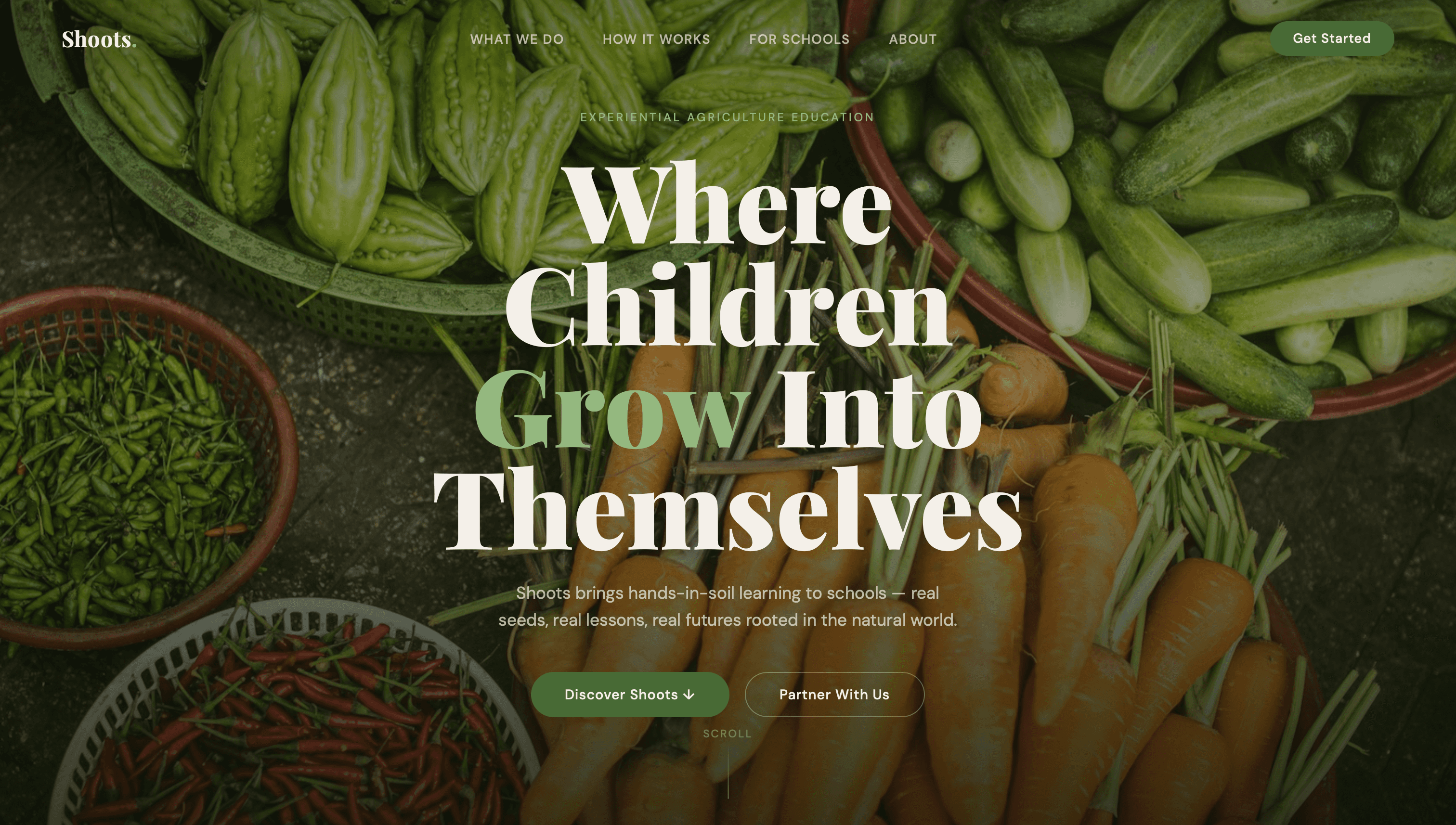
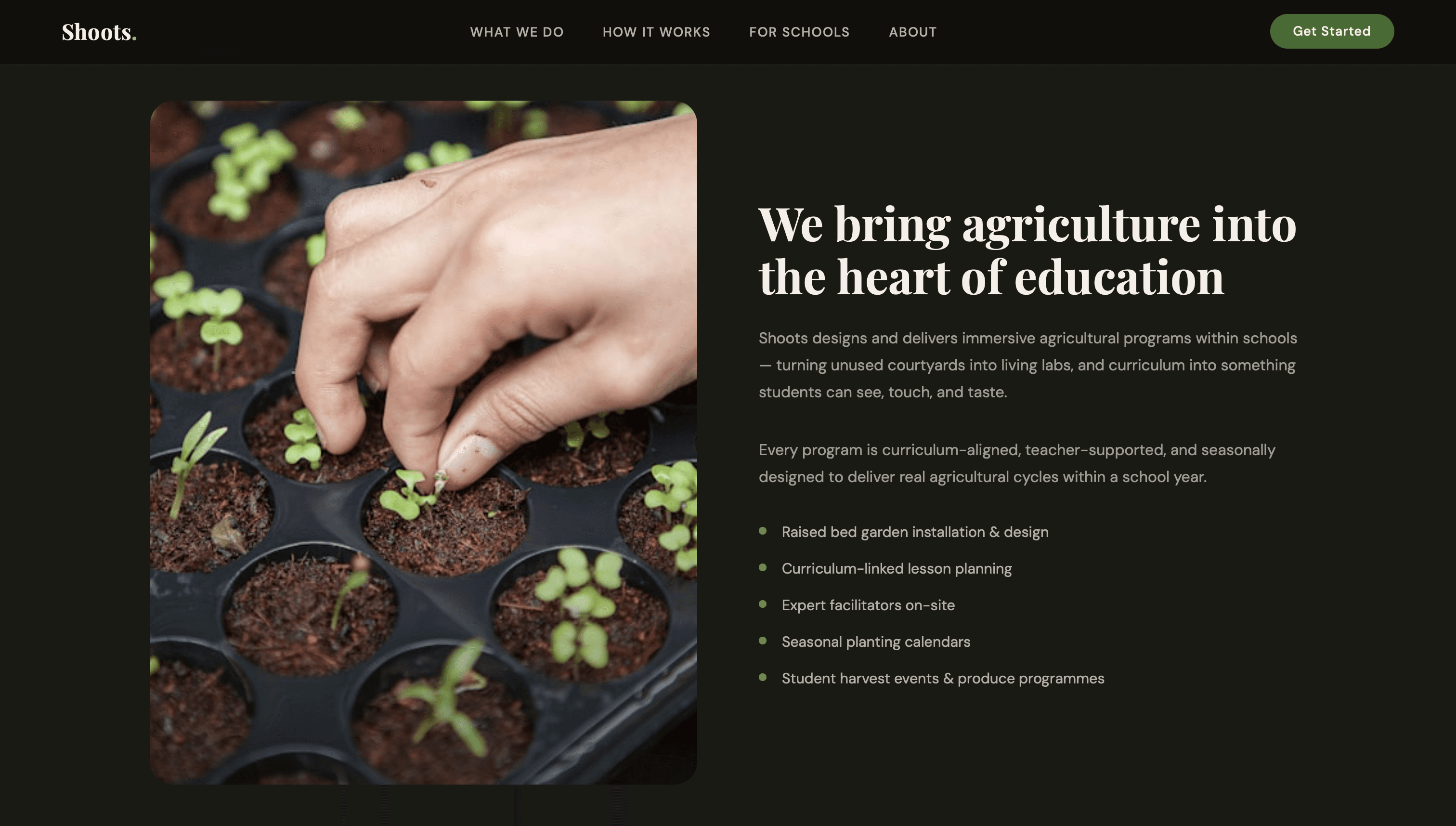
We designed the Grow-Learn-Reflect-Steward framework, a curriculum-integrated model that maps physical allotment work directly to academic content. Students plan, plant, maintain, and harvest, and each stage connects to what they are supposed to be learning: ecology, biology, nutrition, and geography. The allotment is not a reward for finishing the real curriculum. It is the curriculum. The B2E (Board-to-Education) model contracts the programme at institutional level, between the school board and the allotment network, so it survives turnover, budget reviews, and the entropy that kills good ideas in institutional settings.
We designed the Grow-Learn-Reflect-Steward framework, a curriculum-integrated model that maps physical allotment work directly to academic content. Students plan, plant, maintain, and harvest, and each stage connects to what they are supposed to be learning: ecology, biology, nutrition, and geography. The allotment is not a reward for finishing the real curriculum. It is the curriculum. The B2E (Board-to-Education) model contracts the programme at institutional level, between the school board and the allotment network, so it survives turnover, budget reviews, and the entropy that kills good ideas in institutional settings.
The revenue model operates on three reinforcing streams: per-school partnership fees paid to the allotment network, curriculum licensing fees for the GLRS framework sold directly to school boards, and local authority contracts where councils fund school cohorts as part of their environmental education commitments. Each stream strengthens the others. More schools mean more allotment partnerships, which expand the network and increase licensing value.
The revenue model operates on three reinforcing streams: per-school partnership fees paid to the allotment network, curriculum licensing fees for the GLRS framework sold directly to school boards, and local authority contracts where councils fund school cohorts as part of their environmental education commitments. Each stream strengthens the others. More schools mean more allotment partnerships, which expand the network and increase licensing value.
The revenue model operates on three reinforcing streams: per-school partnership fees paid to the allotment network, curriculum licensing fees for the GLRS framework sold directly to school boards, and local authority contracts where councils fund school cohorts as part of their environmental education commitments. Each stream strengthens the others. More schools mean more allotment partnerships, which expand the network and increase licensing value.
Final thoughts
Final thoughts
At 1% penetration, that is 240 schools, a new category of partnership for allotment networks, a proven licensing property for school boards, and a demonstrable model for local authorities. At 5%, it becomes a national programme. At 10%, it becomes infrastructure.
At 1% penetration, that is 240 schools, a new category of partnership for allotment networks, a proven licensing property for school boards, and a demonstrable model for local authorities. At 5%, it becomes a national programme. At 10%, it becomes infrastructure.
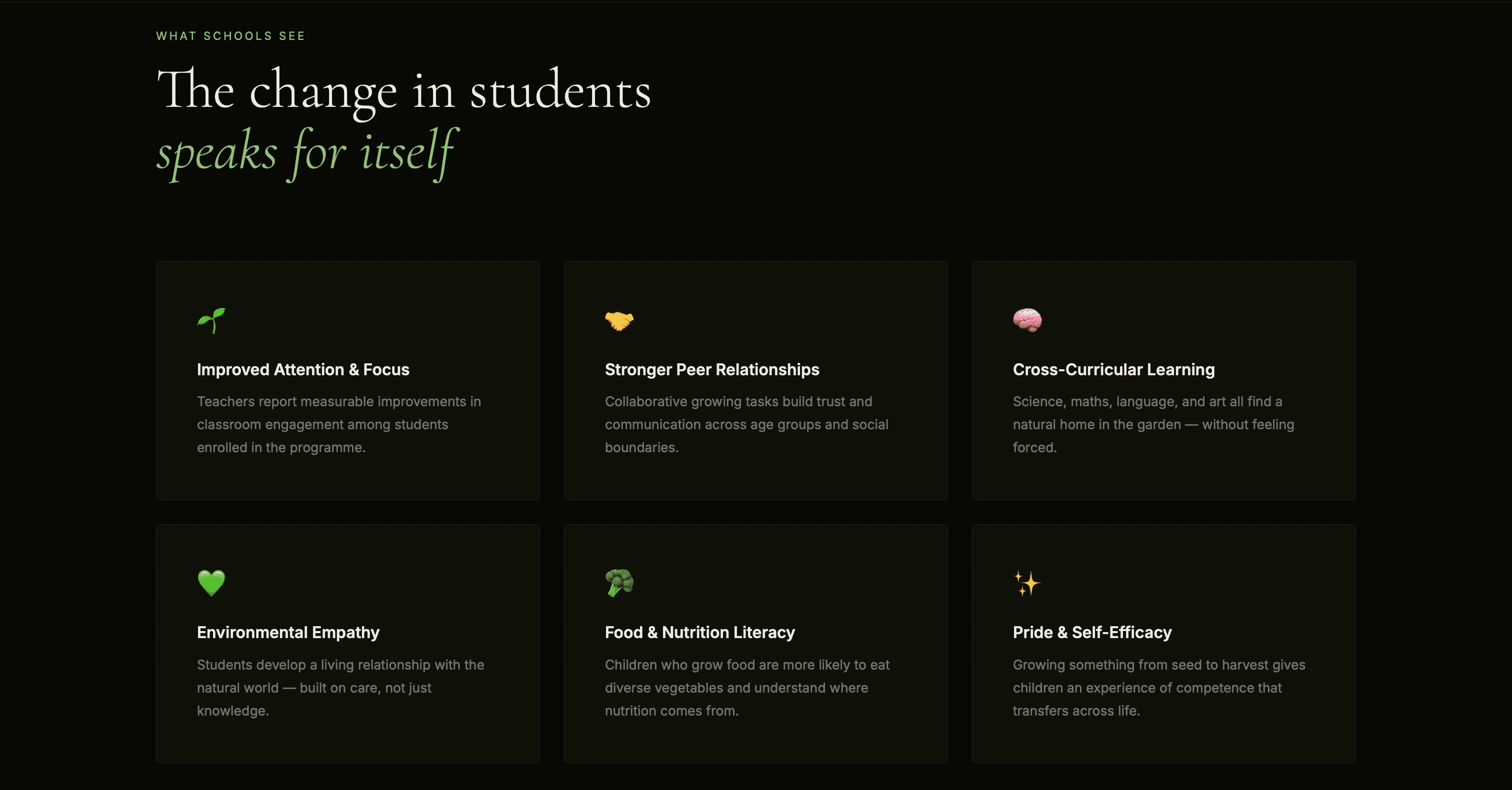
Shoots creates an embodied understanding of ecological systems and a lasting sense of responsibility for living things that most environmental education never reaches. It turns land-based learning into a permanent institutional capability rather than a one-off enrichment activity.

© 2026 soazi®
Let’s talk.
Tell us what’s slowing your business down operations, execution, team alignment, customer experience, or scalability.
Quick response.
If you’re ready to create and collaborate, we’d love to hear from you.
Clear next steps.
After the consultation, we’ll provide you with a detailed plan and timeline.
Let’s talk.
Tell us what’s slowing your business down operations, execution, team alignment, customer experience, or scalability.
Quick response.
If you’re ready to create and collaborate, we’d love to hear from you.
Clear next steps.
After the consultation, we’ll provide you with a detailed plan and timeline.
© 2026 soazi®
Let’s talk.
Tell us what’s slowing your business down operations, execution, team alignment, customer experience, or scalability.
Quick response.
If you’re ready to create and collaborate, we’d love to hear from you.
Clear next steps.
After the consultation, we’ll provide you with a detailed plan and timeline.